
Quick answer: You register a business name with ASIC, not the ATO or a state government, and you need an ABN (or a pending ABN application) before you can do it. Registration costs $47 for one year or $108 for three years (2026-27 ASIC fees), and most applications are approved within a few business days once your details are verified. A registered business name is a trading name only; it does not create a company, and it does not give you trademark protection.
Starting a business is exciting, but before you begin trading, you need to make sure your business name is legally registered. Many first-time business owners assume that getting an ABN or registering a company automatically registers their business name, but these are separate legal requirements.
If you’re wondering how to register a business name in Australia, this guide walks through the entire process: what you need before you start, the exact steps, current costs, and what to do once you’re registered. Whether you’re operating as a sole trader, partnership, company, or trust, this covers what applies to your situation.
Table of Contents
What Is a Business Name and Why Do You Need to Register It in Australia?
A business name is the name your business uses to trade and interact with customers. It represents your brand and appears on your website, invoices, marketing materials, and other business communications.
In Australia, you generally need to register a business name if you trade under a name different from your personal legal name or registered company name. Registration helps identify your business owner details and ensures you meet your legal requirements before trading.
However, registering a business name does not:
- Give you ownership of the name
- Automatically register a company
- Provide trademark protection
- Replace an Australian Business Number (ABN)
Business Name vs Company Name vs Trademark: What’s the Difference?
This is where most first-time business owners get confused, so it’s worth being precise about it before you register anything.
| Registration | Purpose | Who administers it |
| Business Name | Allows you to trade under a chosen name | ASIC |
| Company Name | Identifies a registered company | ASIC |
| Trademark | Secures legal protection for your business name, logo, or brand | IP Australia |
Registering one of these does not register the others. A company registration secures your company’s legal name, but if that company trades under a different name (for example, “XYZ Pty Ltd” trading as “Sydney Tech Experts”), the trading name still needs its own business name registration. Australia has close to 3.75 million registered companies, and a meaningful share of them trade under one or more business names separate from their legal company name, so this overlap trips up more founders than you’d expect.
For example: A sole trader named Sarah Lee trading as “Coastal Creative Studio” must register this business name because it differs from her legal name. If protecting that brand long-term matters to her, she should also consider registering it as a trademark: business name registration alone won’t stop a competitor from using something similar.
Who Needs to Register a Business Name?
You will generally need to register a business name in Australia if you are:
- A sole trader using a business name instead of your personal name
- A partnership trading under a different name
- A company trading under a name other than its legal name
- A trust using a name other than the trustee’s legal name
| Registration Required | Registration Usually Not Required |
| Sarah Brown trading as “Bright Bloom Florist” | Sarah Brown trading simply as “Sarah Brown” |
| XYZ Pty Ltd trading as “Sydney Tech Experts” | — |
What You Need Before Registering
Before starting your business name application, make sure you have:
- An active Australian Business Number (ABN) or a pending ABN application
- An ASIC Connect or Business Registration Service (BRS) account
- Your legal business details and contact information
- A physical business address
- Your preferred business name (plus alternative options)
- An Australian Company Number (ACN), if registering as a company
- A payment method for ASIC fees
Step-by-Step: How to Register a Business Name in AU
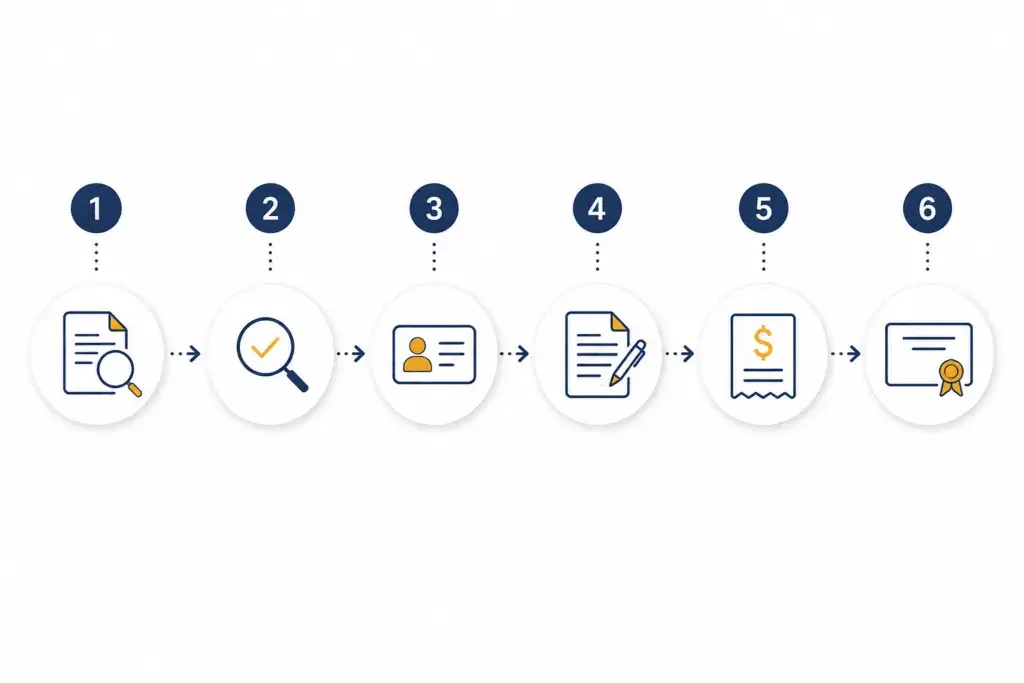
Step 1: Choose a Suitable Business Name
Your business name should be easy to remember, simple to spell, and relevant to your products or services.
Avoid names that:
- Are misleading
- Include restricted words without approval
- Closely resemble existing registered names
- Could create confusion with another business
Choose the right name from the start to build a stronger and more recognisable brand.
Step 2: Check Business Name Availability
Before submitting an application, perform a business name search. Checking availability helps ensure your preferred name isn’t already registered or likely to be rejected.
A search can also help identify:
- Similar existing businesses
- Potential customer confusion
- Future branding challenges
It’s also worth checking whether your preferred website domain and social media handles are available, so your branding stays consistent across every channel.
Step 3: Apply for Your Australian Business Number (ABN)
You cannot complete ASIC business name registration without an ABN. An Australian Business Number is an 11-digit identifier used when dealing with customers, suppliers, the ATO, and other government agencies.
If you don’t already have one, you can usually apply through the Australian Government’s Business Registration Service, which also lets eligible applicants complete multiple registrations, for example, ABN and business name together, in the same process.
Step 4: Complete the ASIC Business Name Registration
Once you have your ABN and have verified your preferred business name is available, you can begin the ASIC business name registration itself.
During the registration process, you’ll typically provide:
- ABN details
- Business owner information
- Business structure
- Physical business address
- Registration period (one or three years)
Double-check all information before submitting. Errors are one of the most common reasons applications get delayed.
Step 5: Pay the ASIC Registration Fee
Business name registration fees are set by ASIC and indexed annually on 1 July.
For the 2026-27 financial year:
| Registration Period | ASIC Fee |
| 1 year | $47 |
| 3 years | $108 |
The three-year registration generally offers better value and reduces how often you need to remember to renew.
Step 6: Receive Confirmation
Once your application is approved, your business name becomes officially registered. Your registration details will generally include:
- Business name
- Registration date
- Expiry date
- Registered holder details
At this point, you can legally trade under your registered business name.
How Long Does Business Name Registration Take in Australia?
Most applications are processed quickly once submitted. Many are approved within one to two business days if all details are correct, and your name doesn’t require manual review. Applications can take longer if:
- Your chosen name is similar to an existing registered name and needs manual assessment
- Your identity or business details can’t be automatically verified
- Your ABN application is still pending
Because delays are usually caused by incomplete or mismatched information, double-checking your details before submitting (Step 4) is the single best way to avoid a slow approval.
What Happens If You Trade Under an Unregistered Name?
Trading under a name you haven’t registered, when registration was required, isn’t just a technicality. ASIC can issue penalties for non-compliance, and beyond the direct fine, it can create practical problems: you may not be able to open a business bank account under that name, invoices and contracts using an unregistered name can be harder to enforce, and you risk another business registering the same name first, forcing you to rebrand. If you’re already trading under a name you haven’t registered, the fix is usually straightforward: check availability and register it as soon as possible rather than waiting.
What Happens After Registration of Your Business Name?
Registering your business name is only one part of setting up a compliant business. Depending on your business structure and activities, you may also need to:
Register for GST: If your turnover reaches the registration threshold or your business activities require it, you’ll need GST registration.
Apply for Business Licences: Some industries require local, state, or federal licences before operating. Examples include food businesses, builders, financial services, childcare providers, and healthcare professionals.
Open a Business Bank Account: Separating business and personal finances makes accounting much easier and supports professional financial management.
Obtain a Director ID. If you’re registering a company, each director must obtain a Director ID through Australian Business Registry Services. This unique identification number helps prevent fraudulent director identities and stays with the individual permanently. This requirement doesn’t apply to sole traders unless they later become company directors.
Protect Your Brand: Registering a business name doesn’t stop others from using similar branding. If your brand has long-term value, consider registering a trademark through IP Australia to protect your business identity.
Common Mistakes to Avoid
Many applications are delayed due to avoidable mistakes:
- Assuming an ABN registers your business name. An ABN and a business name registration are separate requirements.
- Confusing company registration with business name registration. Registering a company doesn’t automatically register every trading name you use.
- Choosing a name without checking availability first. A name may be technically available but still cause branding confusion or legal issues.
- Forgetting to renew your registration. Your registration isn’t permanent. Missing your renewal date can result in cancellation and potential loss of the name.
- Assuming your business name is legally protected. A registered business name does not give you exclusive ownership of your brand. Only a trademark does that.
A Practical Business Name Registration Checklist
Before launching your business, make sure you’ve completed the following:
- Choose the right business structure
- Apply for an ABN
- Select and check your business name
- Register your business name
- Register for GST if required
- Obtain a Director ID (if applicable)
- Apply for any required licences or permits
- Consider trademark protection
- Understand your ongoing compliance obligations
Treat business name registration as the foundation of your business, not the finish line.
Frequently Asked Questions
Does registering an ABN also register my business name? No. An ABN and a business name registration are two separate processes with ASIC and the ATO respectively. You need an ABN before you can register a business name, but having one doesn’t register the name automatically.
Do I need to register a business name if I’m a sole trader using my own name? No. If you trade under your exact first name and surname, registration generally isn’t required. It’s only required once you trade under anything different from your legal name.
How much does it cost to register a business name in Australia? For the 2026-27 financial year, ASIC charges $47 for a one-year registration or $108 for three years.
How long does business name registration take to be approved? Most straightforward applications are approved within one to two business days. Names requiring manual review, or applications with incomplete details, can take longer.
Does registering a business name protect it from being copied? No. Business name registration only gives you the right to trade under that name. It doesn’t stop another business from using something similar. Trademark registration through IP Australia is the mechanism that provides that protection.
Can I register a business name without an ABN? You need an active ABN or a pending ABN application to complete business name registration; you can’t finalise one without the other.
What happens if I don’t renew my business name registration? If you miss your renewal date, ASIC can cancel your registration, and you may lose the right to trade under that name, including the risk of someone else registering it.
If you’re setting up a new business in Australia and want to get the structure, registrations, and compliance right from the start, ICS’s company setup guide covers what’s involved in registering a company alongside your business name.